So many of us live our lives online. Communities connect across long distances, and short, and we find comfort in that common ground online, particularly if what we are going through is unusual, a situation that perhaps few of those close to us can understand.
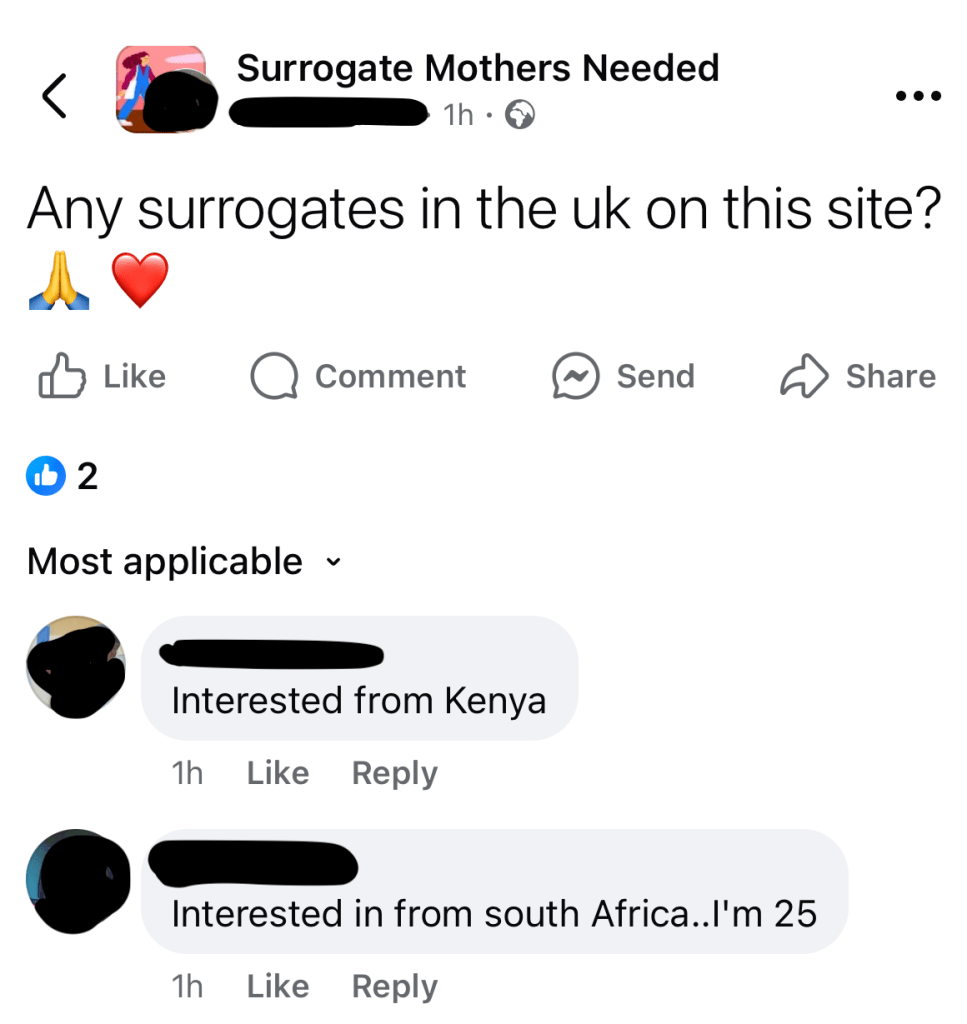
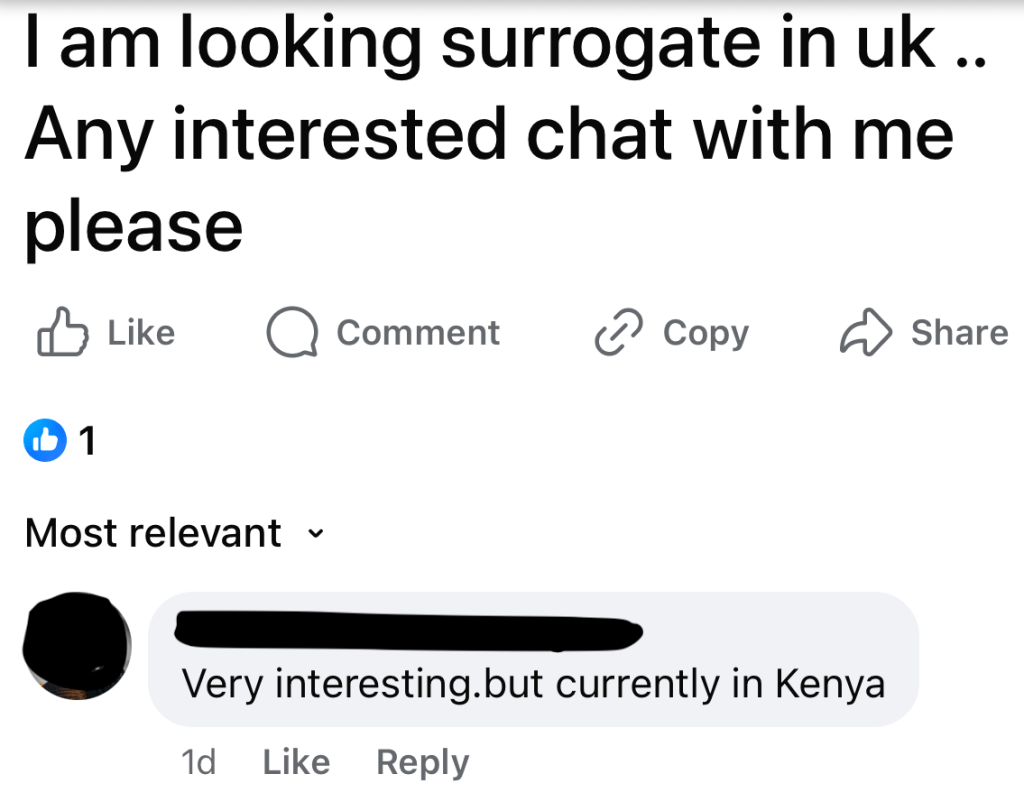
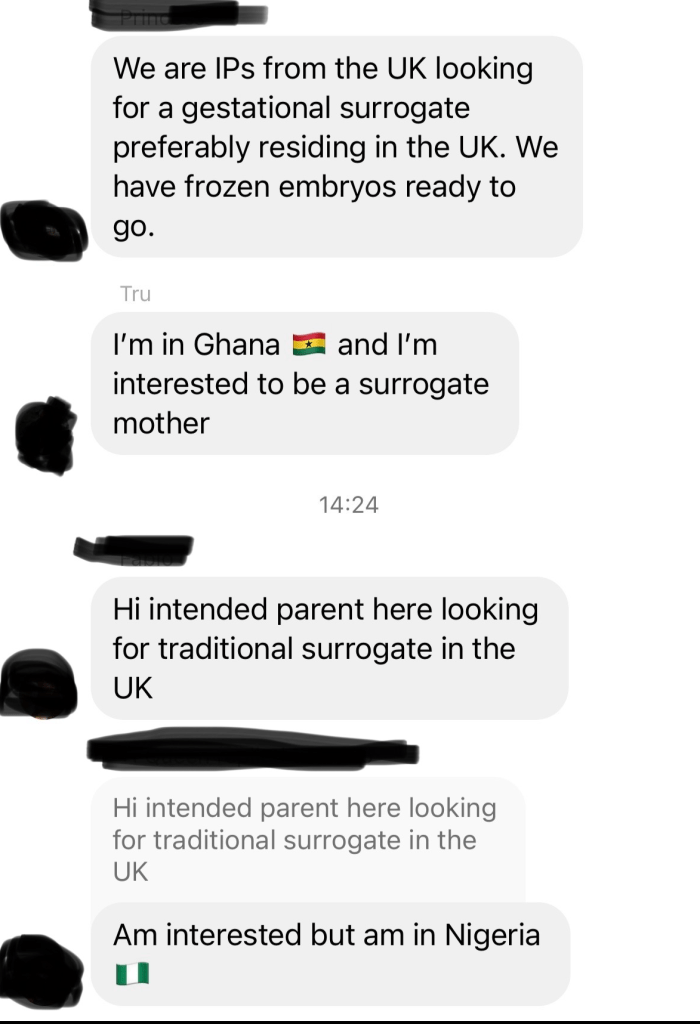
This applies to the online surrogacy world, with a statistically small but growing group of women gathering from around the world to share stories, experience and advice. But it’s not necessarily friendship that guides them. Facebook appears to be the primary place for potential parents to be ‘matched’ with candidates for surrogacy. Women may advertise their availability, detailing their age, previous pregnancies, health status and location or the commissioners can search for a woman they often describe as kind and generous, someone who will help them overcome their childlessness and be the way they start or expand their family.
Inevitably the commissioners may have spent a lot of money on IVF treatment by this point and are looking for cut-price, budget-friendly deal. The women must be fair and not charge too much for ‘expenses’ or ‘compensation’. In their search, commissioning parents will list the application criteria by age, location and BMI. If they want to use her eggs in the process as well her physical characteristics become more important. They will look for women who look like them, so the child may grow to resemble their commissioner.
Whilst these groups are dangerously close to being illegal, as currently advertising for surrogacy from either approach, is banned in the UK, but they almost pose a greater risk when you enter the echo chamber as a surrogate mother.
A recent post on X/Twitter inspired me to review all the screenshots from Facebook groups that have been shared by volunteers over the past 6 months or so. It was suggested that women in these self-help groups are healthy and largely unaffected by their involvement with surrogacy. We would argue the opposite, but, as a Facebook relationship status used to say, it’s complicated.
When surrogate mothers gather they discuss all kinds of topics within surrogacy. From the beginning there are gentle, curious enquiries which are swiftly followed by contract negotiations as they are keen to establish their worth. There is the weight of guilt from failed tests, failed embryo transfers and miscarriage, as if their bodies are not good enough, are not up to the task and may not be able to fulfil the promise they have made.
Women discuss body autonomy, on everything from vaccines and c-sections to abortion and whether they are entitled to receive medical advice, scans or updates without the commissioning parents in the room. Their privacy is compromised further when they discuss whether they can engage in sexual activity with their partners.
Being able to decide for themselves is a recurring theme as contracts can restrict their diet (commissioners can insist on a vegan or vegetarian diet) or travel. One surrogate mother tells her confidants that she has missed the passing of a loved one as she was not allowed – according to her contract – to cross state lines. While contracts are not enforceable in the UK, pressure can still be applied. Once you are pregnant as a surrogate mother, with a baby you tell yourself is not yours but in fact ‘belongs’ to someone else, all bets are off. (British commissioners often engage in surrogacy overseas through agencies and later travel to collect the child. When they return the courts will award them parental rights once some forms have been filled in.)
In this social space these women speak of being rejected by agencies due to their high BMI or issues with a previous pregnancy and will ask whether anyone there knows of a clinic who might take on an older woman, a woman on anti-depressants or one with a pre-existing condition. One woman recently asked if anyone could point her to a clinic who will take her on; with her 4 previous miscarriages and the 5 children she has kept and she is planning another surrogacy pregnancy after her 3rd surrogate born baby who is due in a few months. Group members are quick to share advice and there is an element of ‘clinic shopping’ to side-step the usual limits.
They talk about the painful IVF injections and weight gain, the impact on their emotional wellbeing and even the strain it has on their families, as they aim to help someone else grow theirs, but perhaps the most significant issue discussed is the coercive nature of their commissioners.
Women compare notes, asking if they are being unreasonable as they are encouraged to give over their bodies to surrogacy. Shockingly, the reaction is often one of victim blaming. The “put your big pants on” or “you know what you were getting yourself into” responses are frequent, all shared within a supposed sisterhood for a very special pocket of the internet, one that outsiders couldn’t possibly understand.
Every woman is at some point faced with the biological reality of pregnancy, like any other woman, from the limiting daily morning sickness to life threatening preeclampsia. These situations lead to discussions about disability and life insurance and how much are their lives worth, including to those they might leave behind. With the increase of risk of twins or triplets come higher rates of pay…some might call it danger money.
Agency list their going rates for a hysterectomy, others hide these details in contracts. If a woman who relies on her uterus to make a living, arguably this permanent removal of this reproductive organ affects her career prospects, so what is this worth in monetary value? The prices vary…
Post birth we have seen women speak about their periods getting heavier, their bodies changing beyond recognition as the pregnancy and labour was so much harder than their previous experience of childbirth. There are practical discussions about expressing colostrum and breastmilk, how best should this precious fluid might be shipped and shared.
I have myself noticed commissioning parents returning to these groups to ask women how they might obtain breastmilk for the babies they took from their mothers at birth, could these random mothers on the internet root around “at the back of the freezer” to see if any is going spare? (Breastmilk banks rigorously tested for bacteria, heated to eliminated viruses and is stored in temperature monitored freezers. )
Surrogate mothers who speak about their worries and regrets are quickly shut down and can even be ejected from the group. These women may be entering a frightening new legal experience with subsequent court cases or an abandoned baby but no one will be there to support them as the shiny seal has been broken and tarnished. This is not the type of surrogacy the groups are usually interested in, though we have seen one woman who are allowed to stick around share how her ‘journey’ ended in her losing her job and divorcing her husband.
What is perhaps the most shocking is how when women do have regrets and suffer the mother child separation (which they were told they would not experience as it is not their baby) their new friends rally round to reassure them that this is simply their hormones reacting and this is not something they should worry about. They are told to straighten their spines as if they are facing a tricky work problem or relationship situation and not the desperate loss of a baby who hasn’t died, a child they know in their bones they will never see him or her (or them) again.
The message is clear, sweep this under the carpet as it’s not real, you are not the mother, this natural maternal bond is an illusion. Surrogate mothers are not allowed to feel what is real.
Some women who have a bad experience will praise the benefits of going another round. The aim appears to be to wipe away the bad memories with a new happy ones. It was just a ‘bad match’, she was unlucky, she knew she should have listened to her instincts and she will next time. If the new relationship break downs, or her health deteriorates again, there’s always a third time lucky 🤞.
There is a sense of toxic encouragement rather than genuine interest and reviewing the post and responses reminded me of what you might have once seen on a pro-ana site. (Try Googling to find out what I’m talking about and you’ll find those sites have been shut down, for good reason.)
One small silver lining is the direct messages a woman might receive when she has been shown the door. We have also seen the messages of careful support and camaraderie, away from the main stage where only ‘baby dust’, crossed fingers and positive vibes are permitted.